
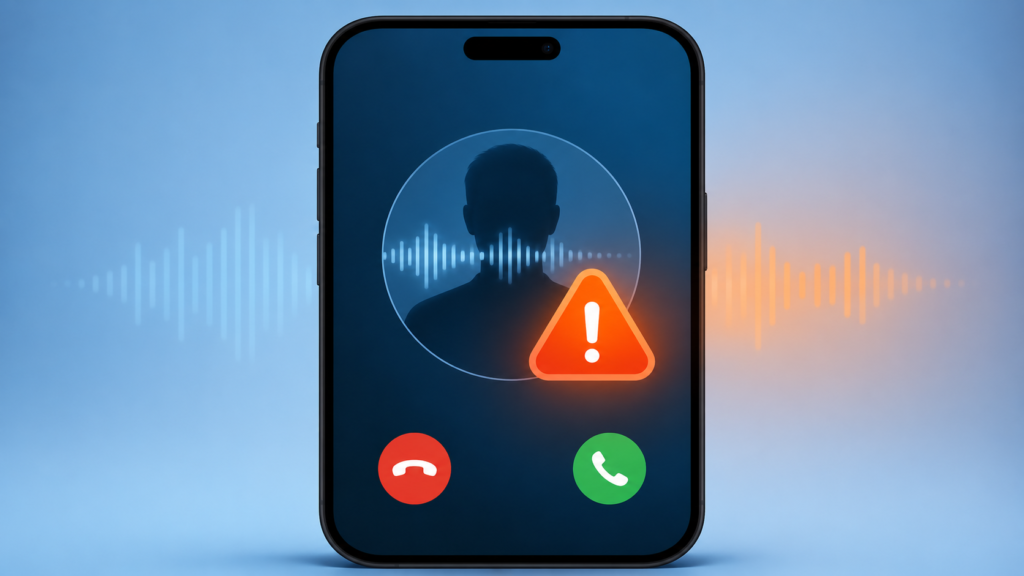
A voice cloning scam can sound exactly like someone you trust. You answer the phone and hear your daughter’s voice — panicked, crying, saying she’s been in an accident and needs money wired right now. Except it isn’t her. It’s an AI clone of her voice, built from a few seconds of audio pulled off her Instagram stories.
This is vishing (voice phishing), and in 2026 it’s one of the fastest-growing scams on the planet. AI voice cloning tools can now recreate a convincing copy of someone’s voice from as little as three seconds of audio, and scammers are using that to drain bank accounts, steal business funds, and terrify families. Here’s how the scam works, the red flags that give it away, and the steps that actually stop it.
What Is a Voice Cloning Scam?
A voice cloning scam is when criminals use AI software to imitate a real person’s voice — usually a family member, boss, or bank representative — to trick you into sending money, sharing account details, or granting remote access to a device. Unlike old-school robocalls, these calls sound genuinely human, complete with the right accent, tone, and even emotional inflection.
Scammers train the voice model using audio scraped from:
- Public social media videos and voice notes
- Podcast appearances or YouTube clips
- Voicemail greetings
- Previous calls (including calls to customer service lines)
Once trained, the clone can say anything the scammer types, in real time, over a phone call.
Common Voice Cloning Scam Scenarios
The family emergency call. A “relative” claims they’re in jail, hospitalized, or in an accident abroad and needs an urgent wire transfer. Pressure and secrecy (“don’t tell mom yet”) are the giveaways.
The executive/CEO scam. An employee gets a call that sounds exactly like their boss, urgently requesting a wire transfer or gift card purchase before a “meeting.”
The bank security call. A cloned voice claiming to be from your bank’s fraud department asks you to “verify” your account by reading back a one-time passcode — which actually lets the scammer into your real account.
The kidnapping hoax. Scammers play a cloned voice of a “kidnapped” family member crying for help, demanding immediate payment before you can think to call the person directly.
Warning Signs of a Vishing Call
- Urgency and secrecy. Real emergencies rarely require absolute secrecy or an immediate wire transfer before you can verify anything.
- Unusual payment requests. Gift cards, wire transfers, or cryptocurrency are the top three vishing payment methods — legitimate institutions never ask for these.
- Slight audio artifacts. Cloned voices can sound slightly flat, have odd pacing, or drop emotional inflection mid-sentence, especially during longer calls.
- They avoid video. If asked to switch to a video call to confirm identity, scammers usually make excuses or hang up.
- Caller ID spoofing. The number may show as a trusted contact or real institution, but this is easily faked and proves nothing.
7 Ways to Protect Yourself From AI Voice Scams
- Set up a family safe word. Agree on a private word or phrase with close family members that only you would know. If a call claims an emergency, ask for the safe word before doing anything else.
- Hang up and call back. Never act on the call itself. End it and call the person or institution directly using a number you already have saved — not one given during the call.
- Slow down on purpose. Scammers rely on panic. Tell yourself you will not send money or information during the first call, no matter what.
- Limit public voice samples. Keep long, clear voice or video clips off public profiles where possible, especially for children and older family members who are common targets.
- Verify payment requests through a second channel. For workplace requests, confirm any wire transfer or purchase through a separate messaging system or in person, never just a phone call.
- Use call screening and scam detection tools. Many phones now include AI-based scam call detection (available on recent Android and iOS updates) — keep it turned on.
- Report and warn others. If you or a family member receives one of these calls, report it to your bank, local authorities, and warn relatives who might be targeted next, especially elderly family members.
What to Do If You’ve Already Sent Money
- Contact your bank or payment provider immediately to attempt a reversal or freeze.
- File a report with your local police and, if in the US, the FTC or FBI’s IC3.gov.
- Change passwords and enable stronger authentication on any accounts mentioned during the call.
- Watch your accounts closely for follow-up scam attempts — victims are often targeted again.
Frequently Asked Questions
Can AI really clone someone’s voice from a few seconds of audio? Yes. Modern voice cloning tools can produce a convincing replica from as little as 3-10 seconds of clear audio, which is why even a short social media clip can be enough.
Is voice cloning illegal? Using AI to clone a voice for fraud is illegal in most countries, but the scams often originate overseas, making prosecution difficult. Prevention and awareness remain the best defense.
How do I know if a call is a real emergency or a scam? Use the safe word method, or simply hang up and call the person back on a number you already trust. A genuine emergency will hold up to a callback.